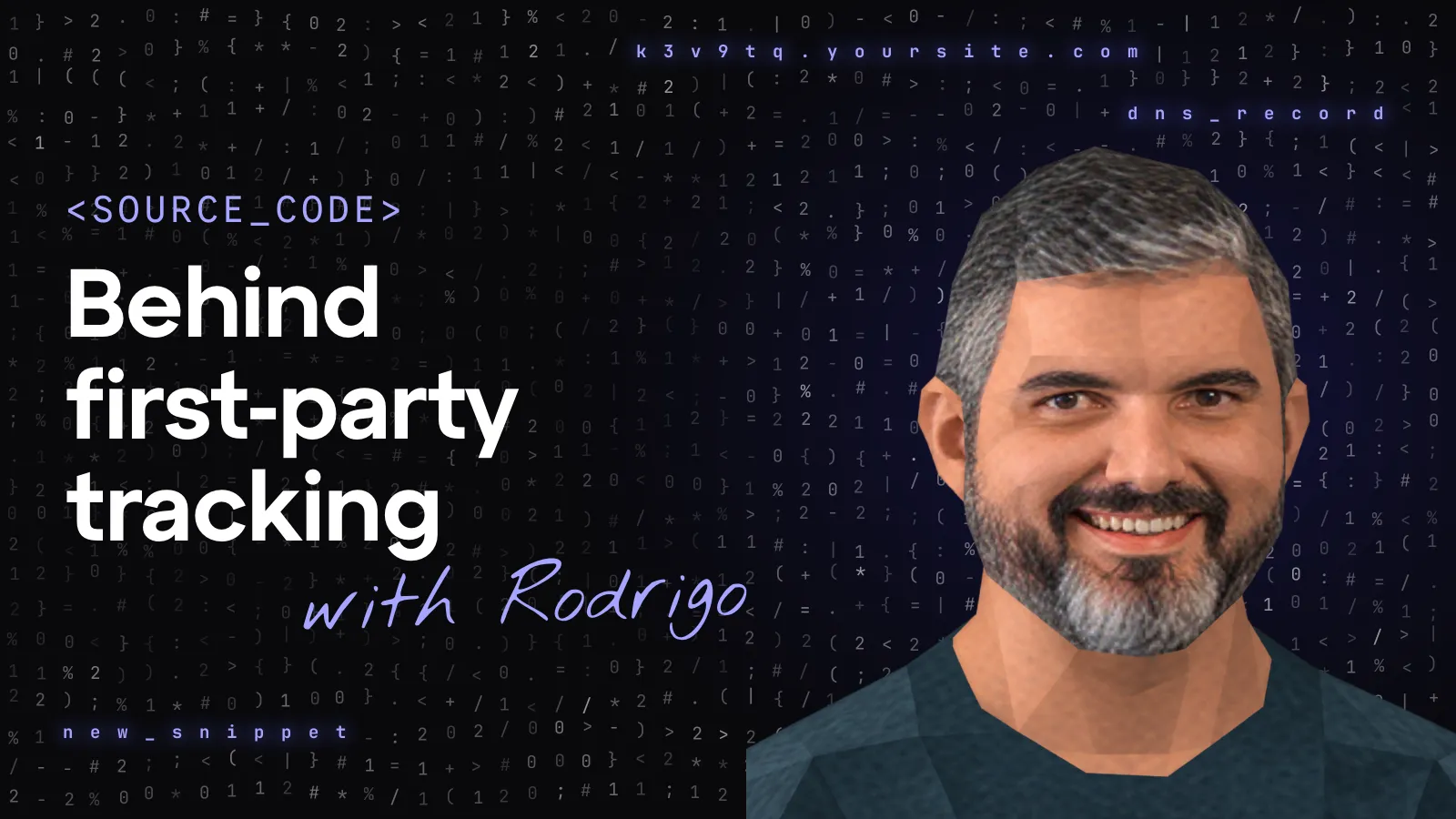
Rodrigo Panachi is a staff engineer at Snitcher. We sat down with him about beating his own referral to a job here, the day his own ad blocker blocked us and how making caipirinhas led to a new feature.
More of a release-notes person? Here’s the feature rundown.
Let’s start at the beginning. How did you end up here?
I was looking for a new job and heard about Snitcher from a friend who’d interviewed here. He told me, “I talked with this company and they look smart, like your kind of thing. It’s a small company and it fits you better than me.”
So he recommended me, but in the meantime I’d already messaged Jerre (our founder) to say I was available. Jerre sent me a meeting link right after.
It was really a coincidence and the timing was perfect. We had a quick chat where they explained the job and it was very similar to what I’d been doing before.
Before we carry on, what is first-party tracking?
It’s basically a way to send the tracking signal to Snitcher through a subdomain of your own website instead of snitcher.com, because some ad blockers block Snitcher. They’ve put us on public blocklists and visitors who use those blockers can get lost from the tracking.
First-party tracking lets you use your own domain and avoid the blocklists that make us lose events and visits. The expected outcome is more identifications and more events coming in overall. You don’t have the same risk of visitors having ad blockers, so it’s more reliable.
How did anyone notice, if a blocked visit leaves no trace?
I installed an ad blocker at home and it started blocking Snitcher. When I tried to access our dev environment it was blocked and I thought, what’s happening? I had some time to figure it out.
So while I was making caipirinhas at the offsite, I brought it up: “Hey, Snitcher is on some of the blocklists on the internet.”
A lot of things here start with someone experimenting or vibe coding something. So how did a round of caipirinhas turn into a feature?
We discussed it, but we didn’t try anything at the time. Some weeks later Dre (Andreas, who built our MCP) came up with the idea for first-party tracking. I think it came out of that discussion, but I haven’t confirmed it.
Dre had already talked with our infra people and they’d come up with a solution, so we just needed to configure the application. He’d started on that part and then he was away, so I picked it up from there.
(His ticket for it was called “Ad blockers silently drop our tracker”, which is the whole problem in six words.)
How did you test it? Install every ad blocker going?
I tested it on the workspace for my own blog and with Davey (our product design lead). He came up with the designs, but we iterated and tested it for real, so the final version was validated on real use.
This used to need a developer. Who did you build it for instead?
It’s easy to install. Actually, you just enable an option and add a DNS record, which everyone is able to do. After that you update your snippet, because the address it loads from changes. There’s also an option to do that with Claude or copy the prompt, ready to use.
The person who switches it on probably isn’t the technical one, so the “Ask for help” button sends the instructions to a teammate. There’s a docs page too, if you’d rather send them a link.
One thing worth mentioning: first-party tracking was possible before. It was just complex, because you needed to configure a server on your side and do a lot of configuration. Now it’s super simple and you don’t need to do anything on your own infrastructure. It’s not new or revolutionary, just a lot easier to do.
Why do the subdomains look like someone fell asleep on the keyboard?
Actually, that’s on purpose. Ad blockers don’t just block our domain. They also block obvious names like analytics or tracking, so Snitcher picks a short random name for you, something like k3v9tq.yoursite.com.
How many more visits are we talking about?
Our estimate is 10 to 20% more visits than with the standard tracker. Our biggest customer using it switched it on as soon as they signed up.
Who should switch this on first?
Every customer can, but I think the bigger customers will benefit most. Actually, it’s already available to everyone in the settings, so the next step is just telling everyone: hey, we have this nice feature, you should enable it.
Any lessons?
I don’t know, but I think the way this came about is how it should work. We had an informal conversation (nothing too strategic) and kept it in mind. Then suddenly we had a solution and a feature that makes the product better for our users. I think that’s how we should keep doing things.
(His title for this piece, by the way: “How making caipirinhas increased my visits”. And his review of our PS2-style header images: “very high definition for PS2 graphics”.)
First-party tracking is live on every workspace. Start setup in your tracker settings or read the feature rundown first if you want the whole picture.