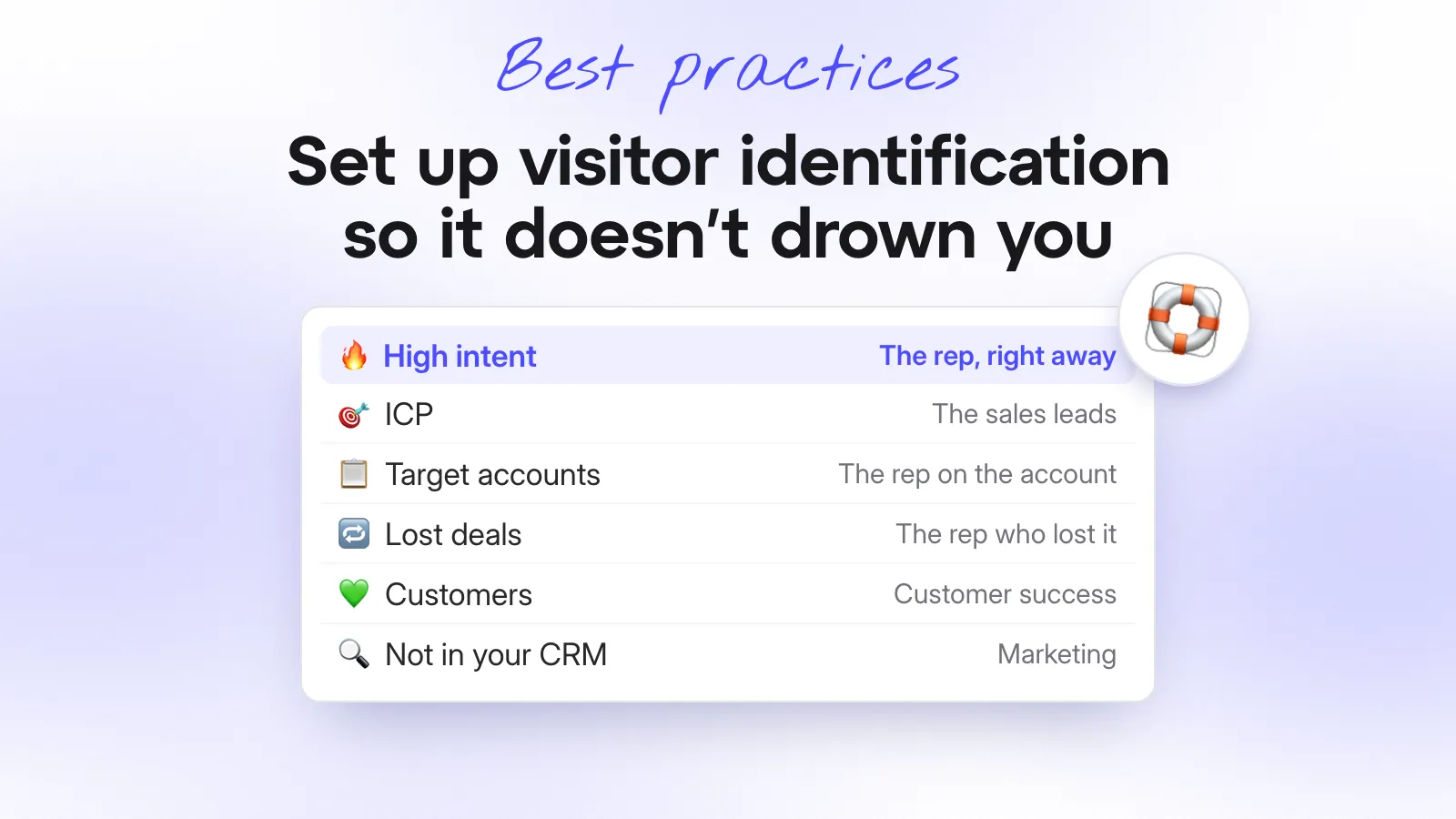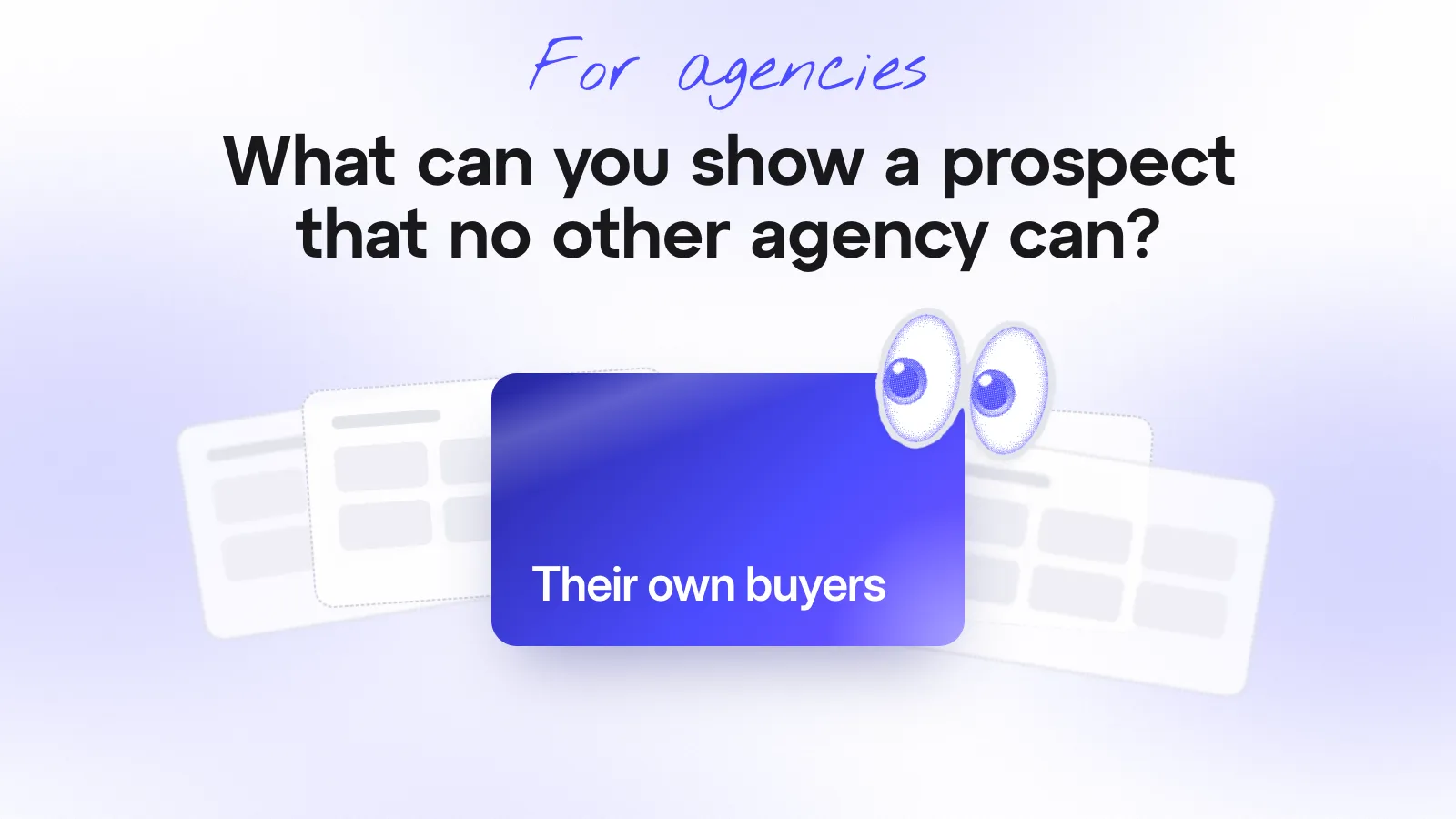
Your prospect is sitting in their third pitch meeting of the week. Slide two is the logo wall, slide three is a process with four steps and a circular arrow. Slide four says “data-driven”. Your deck is next and it has all of those too.
They’re going to pick one of you. If nothing in the room helped them tell you apart, they’ll pick on price or on who they liked. (Neither reason survives the first bad month.)
Every agency brings a deck about itself.
Why not bring the prospect’s own buyers instead? The companies that are already interested, that nobody on their side has called.
Snitcher names the companies visiting a website, form or no form. With 14 days and the prospect’s OK, you can walk into the pitch with names no other agency in that room has.
Why do prospects struggle to tell agencies apart?
Because every pitch is about the agency. Case studies from other markets, results from other budgets, a team page. All of it might be true but the prospect can’t check any of it.
So they compare what they can compare:
| What’s in the deck | What the prospect thinks |
|---|---|
| Case studies | Different market, different budget. Would it work for us? |
| “3x pipeline for a SaaS client” | Compared with what? |
| Our process | Everyone’s process has four steps |
| The team | Nice people. So were the last two agencies. |
| The price | Finally, something we can compare side-by-side |
That last row is how you end up winning on price. A client you win on price is one you’ll lose on price, usually to the next agency with a cheaper deck. (If you’re winning pitches and losing renewals, start with your reports.)
Your work might be better than everyone else’s. The pitch just doesn’t show it because none of it is about them.
What would they actually want to see?
Their own business from a side they can’t see themselves.
Most companies that visit a B2B website never fill in a form. The prospect’s marketing team sees traffic and a handful of enquiries.
So show them three things.
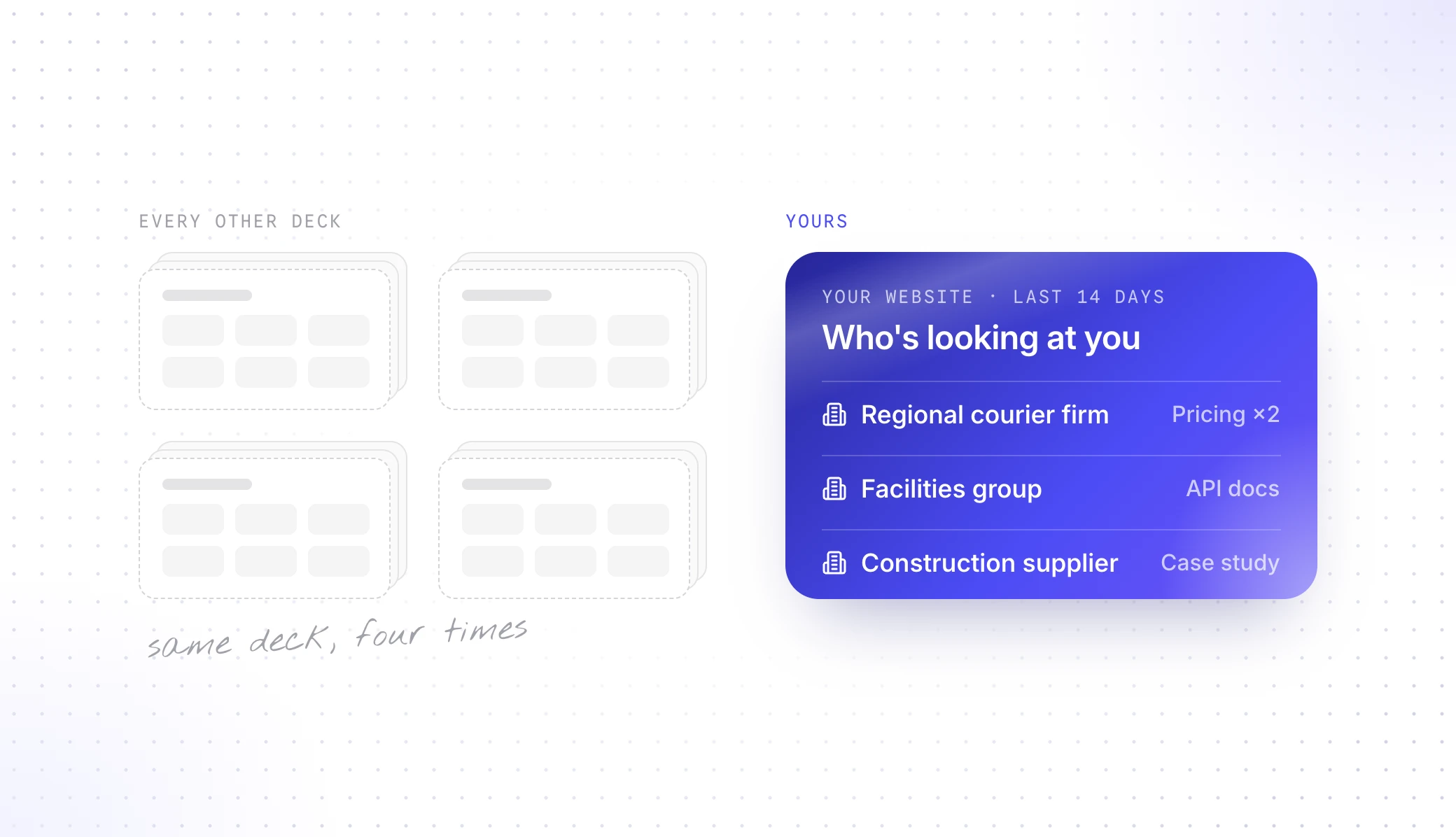
- Who’s looking: companies on their website in the last two weeks that look like their customers.
- Who’s been missed: the ones nobody on their side has spoken to.
- What you’d do about it: what each one read, who to ask for and why now.
That proves you understand their market, not just yours. It also does something a case study can’t. It gives their sales team something to do on Monday, whether they hire you or not.
(Which, fortunately, makes them more likely to hire you.)
How do you get that before you’ve won them?
You ask. There’s no way to see who’s on someone’s website without a script on it, so you need their OK. It’s a smaller ask than it sounds.
Start with your own website. Partners get a free Snitcher account, so put it on your agency’s site first. You’ll see which prospects are reading your case studies and pricing before they get in touch. The pages they read tell you what they care about and the companies tell you who to offer this to.
Then make the ask on the first call.
“Before we send a proposal, give us 14 days with a script on your site. We’ll come back with the companies already looking at you that nobody has called. If the list is useless, you’ve lost nothing.”
It costs them nothing and everyone wants to know who’s on their website.
Expect the same three questions clients ask.
| They ask | What to tell them |
|---|---|
| “We’ve got Google Analytics” | It shows how many came from LinkedIn. This shows which companies |
| ”Is this legal?” | Snitcher names companies under legitimate interest and the data stays in the EU. Send their legal team this |
| “Will it catch every visit?” | No tool does, whatever they tell you. But Snitcher names far more than the few who fill in a form |
Then get three things from them before you hang up.
- The industries, countries and company sizes they sell to.
- Their biggest customers and competitors, so those stay off the list.
- A few companies they’d most like to win.
What do you put in front of them?
One page before the credentials. (Keep the credentials. Just put them after.)
The page has three parts.
- One headline line. “In 14 days, 186 companies visited your website and 41 of them look like your customers.”
- Five companies worth calling. What they read, who to ask for and why now.
- One thing you’d change. Something the list told you about their marketing.
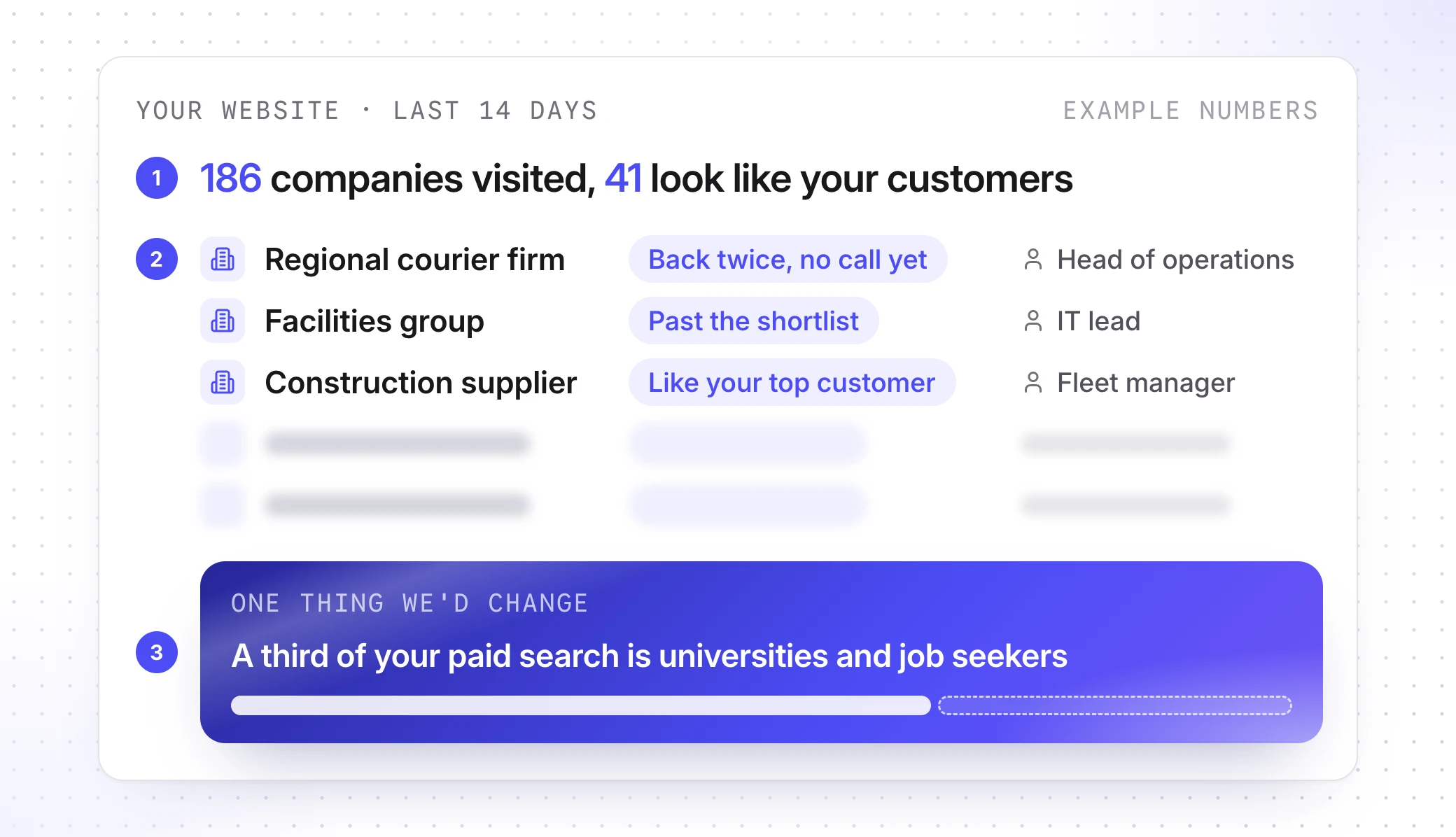
Here’s how the middle part could look for a prospect that sells fleet tracking software:
| Company | What they read | Who to ask for | Why now |
|---|---|---|---|
| A regional courier firm | Pricing, twice this week | Head of operations | Back twice in a week and nobody’s been in touch |
| A facilities management group | Integrations and the API docs | IT lead | Technical pages usually come after the shortlist |
| A construction supplier | A case study about your biggest customer | Fleet manager | Same size and sector as that customer |
The third part is your pitch. Something like: “A third of your paid search visits came from universities and job seekers. We’d fix that in the first month.” That’s what you’d do, proven on their own data.
Then ask one question in the room: “Which of these do you know?”
If they don’t know most of them, the other decks stop mattering.
Send the page afterwards, with the best name in the email itself:
Hi Sam,
As promised, here are the five companies from your website that we’d call first.
Start with the courier firm. They’ve read your pricing twice this week and haven’t been in touch.
The full list stays in your trial account until it ends. If you’d like a list like this every Monday, that’s what our proposal covers.
Marios
If the list is short, say so. Low traffic means they’re not ready for this yet and you’ve both avoided a contract that wouldn’t have worked. If the list is full of the wrong companies, that’s your pitch.
So, what can you show a prospect that no other agency can?
Their own buyers. Every agency in the room can show what it did for someone else. Only the one that asked for 14 days can show who’s already on the prospect’s website and hasn’t been called.
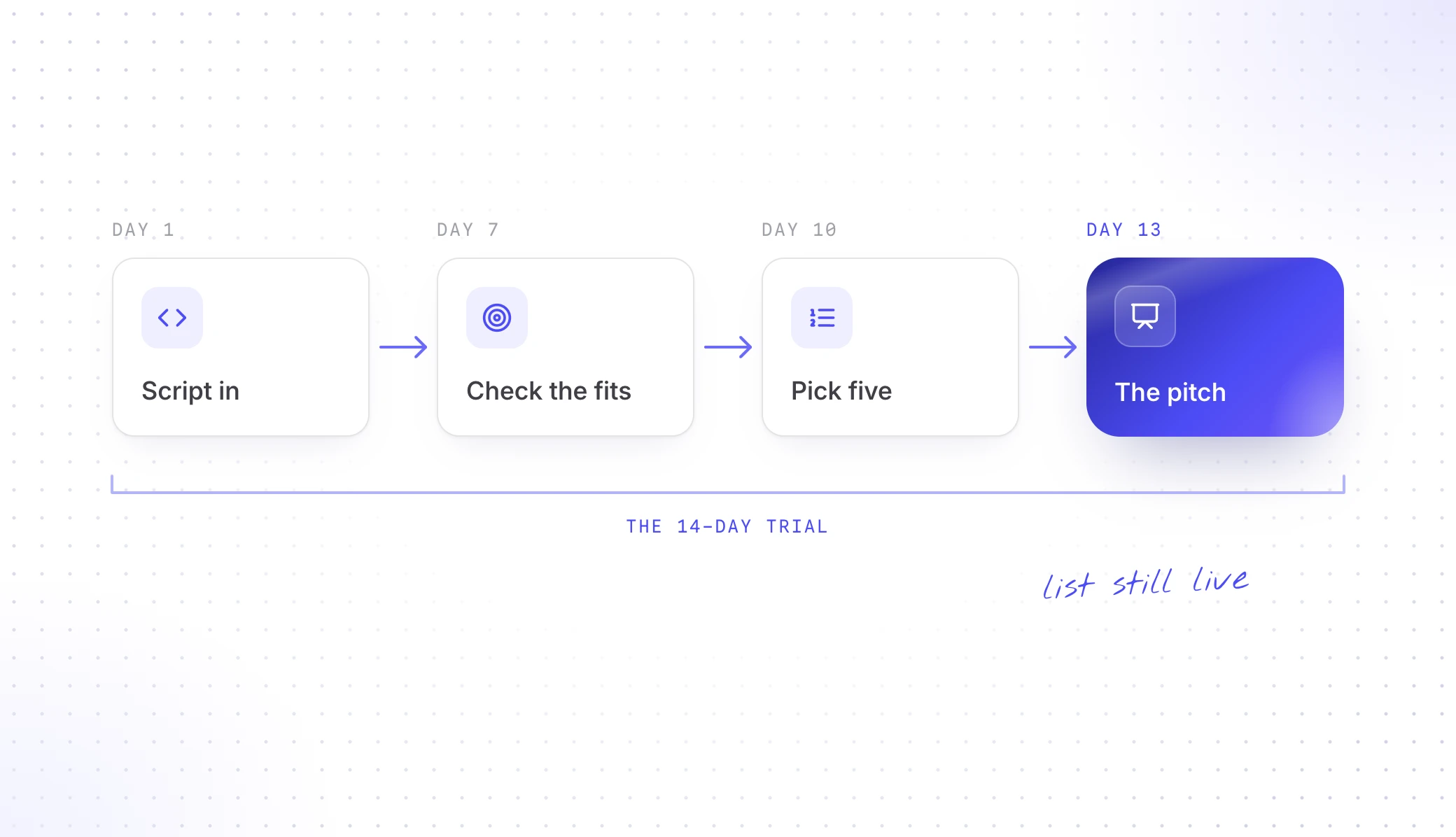
Get the script in with their OK, grade what comes in, pick five names you’d bet on and put that page before your credentials. The conversation moves from your day rate to their buyers.
Once you’ve won them, keep doing it every Monday.
Here’s the whole thing in one table:
| When | What you do |
|---|---|
| Before the first call | Run Snitcher on your own site and see which prospects are reading |
| The first call | Ask for 14 days and get their brief |
| The day the script goes in | Grade the companies and leave out customers and competitors |
| Week two | Pick five names and add who to ask for and why now |
| The pitch | One page first, then ask which of them they know |
| After the pitch | Send the page with the best name in the email |
Snitcher finds the companies. You tell the prospect what they mean.

“Snitcher is a gamechanger. I now have consistent and complete control of all our client accounts.”

Pitching next month? Join the agency program and set up your first prospect today. You’ll have names before the pitch.