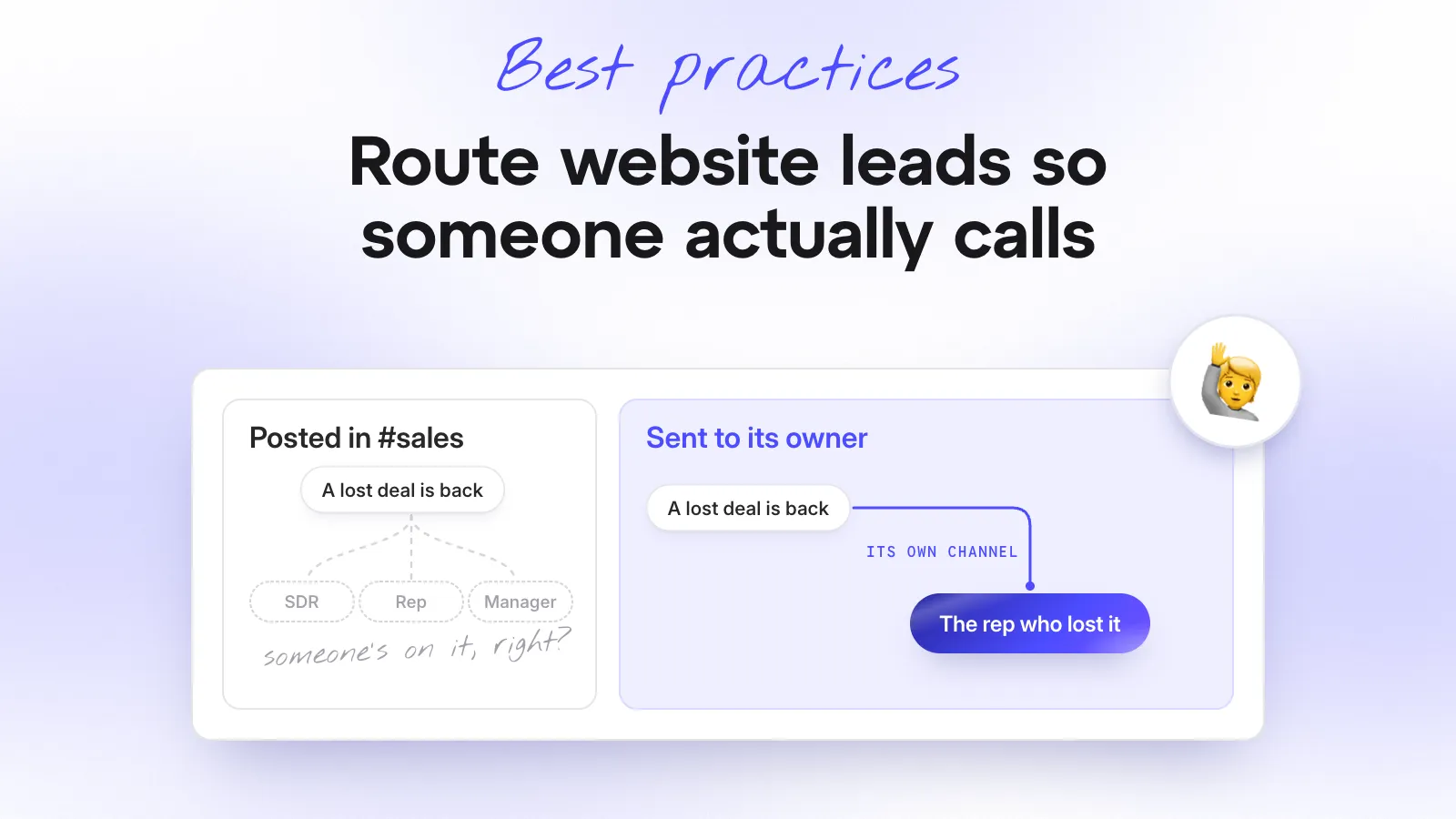
Your biggest lost deal from last year is back on your pricing page. Three people on your team see the alert.
The SDR sees the company is already in the CRM, so it must belong to an account executive. The account executive who lost it assumes someone else picked it up. The sales manager sees two people looking at it and figures it’s handled.
Nobody gets in touch. In March, they sign with someone else.
The worst outcome in sales isn’t a bad lead. It’s a good lead that three people each assume someone else has. This post covers why ownership breaks, a few simple routing rules, why every rep should have their own channel, what to do with the accounts nobody owns and how stages stop the same company being reviewed five times.
Why does ownership break?
Because most companies on your website don’t arrive with a name attached, and the ones that do often have the wrong one.
| Situation | What everyone assumes | Who should own it |
|---|---|---|
| A company you’ve never seen | ”Inbound will pick it up” | Whoever’s next in the rotation or territory, if it’s a good fit |
| An account with an owner in the CRM | ”It’s in the CRM, someone’s on it” | The account owner. Always. |
| A lost deal that’s back | ”That’s old, it’s nobody’s now” | The rep who lost it |
| An existing customer | ”Sales? CS? Both?” | The customer success manager, with sales looped in for upsells |
| The owner has left the company | Silence | Their manager, until it’s reassigned |
That last row is the sneaky one. When a rep leaves, their accounts don’t. They sit in the CRM under a name nobody reads anymore, and every visit goes to an inbox that’s been switched off.
What are some simple routing rules?
One company, one owner, decided by a rule rather than by whoever saw it first.
Write the rules down in order. The first one that matches wins:
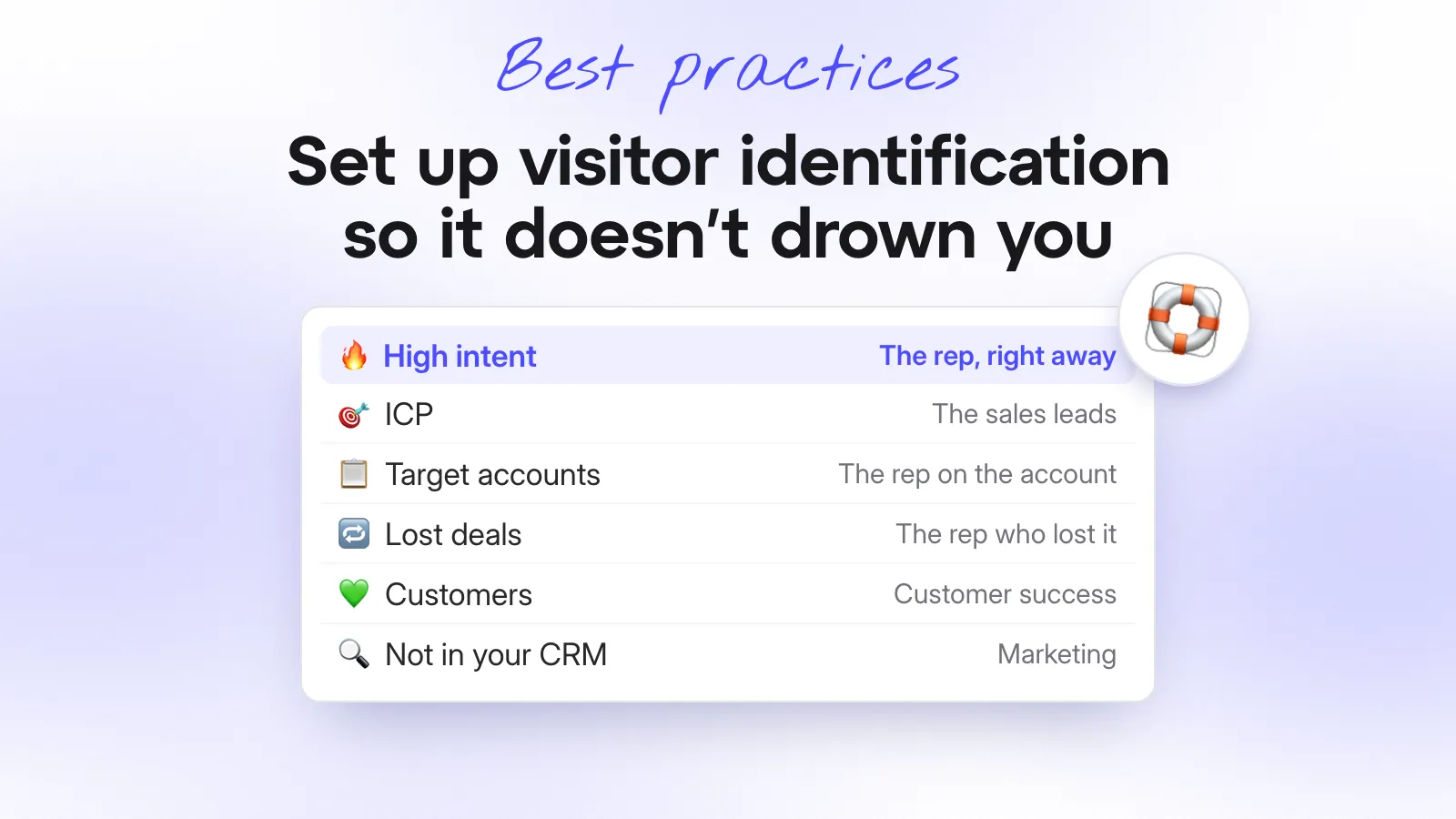
- A customer? Customer success.
- An owner in the CRM? The owner, or their manager if they’ve left.
- A lost deal? The rep who lost it.
- On a target list? The rep on the account.
- A good fit? Next in the rotation.
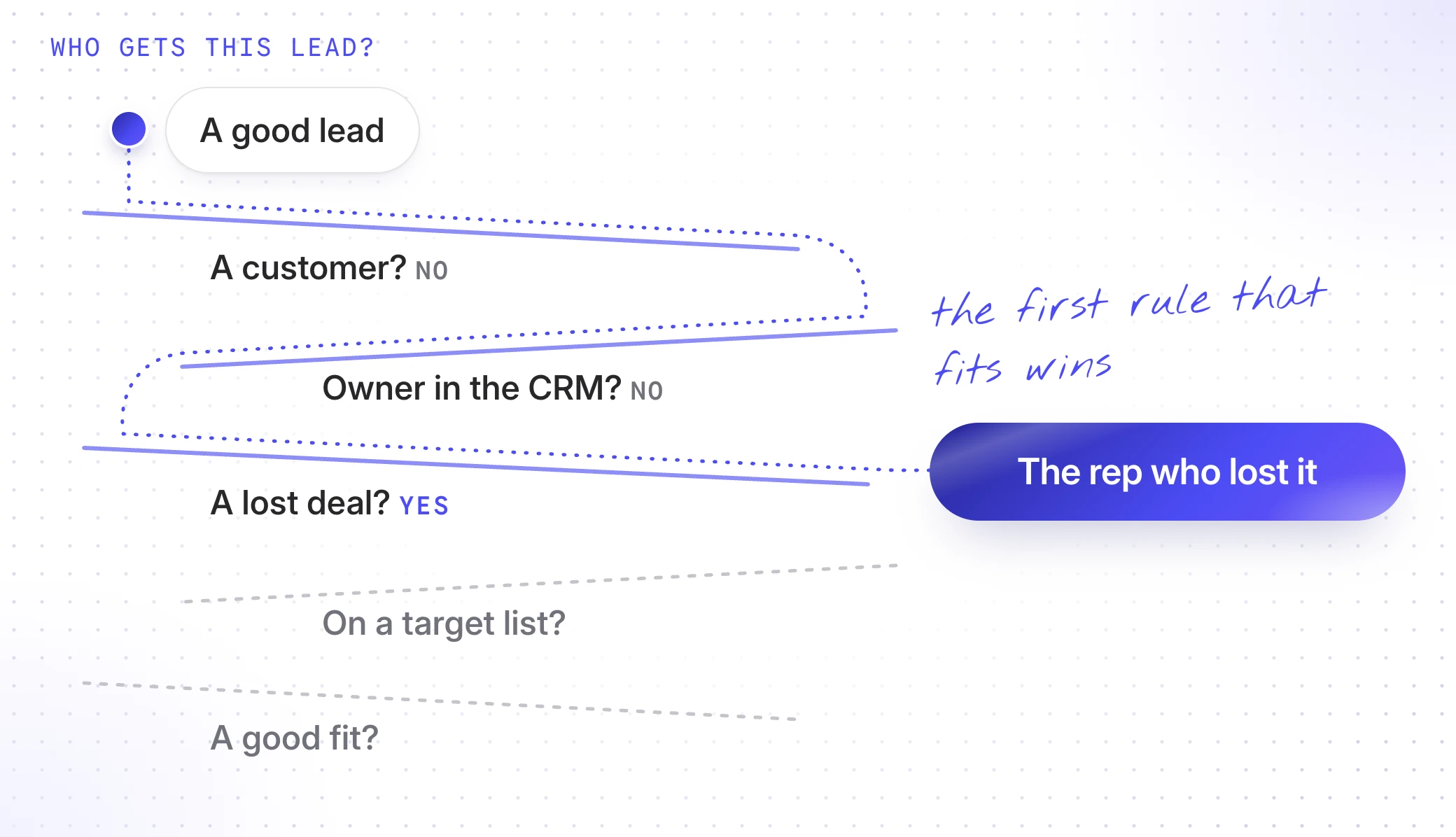
If your routing doesn’t fit on a sticky note, you have too many rules. If it needs a meeting, you don’t have any.
Why should every rep have their own channel?
Because a shared channel is where good leads go to be 👀‘d.
Post an alert in #sales and everyone sees it, so nobody owns it. Three people react, nobody replies and the thread scrolls away before lunch.
At Snitcher, every rep has their own Slack channel for their lost deals, like #deans-lost-deals and #aarons-lost-deals. When one of their old deals comes back, the alert lands in a channel with their name on it. There’s nobody else to assume it’s handled.
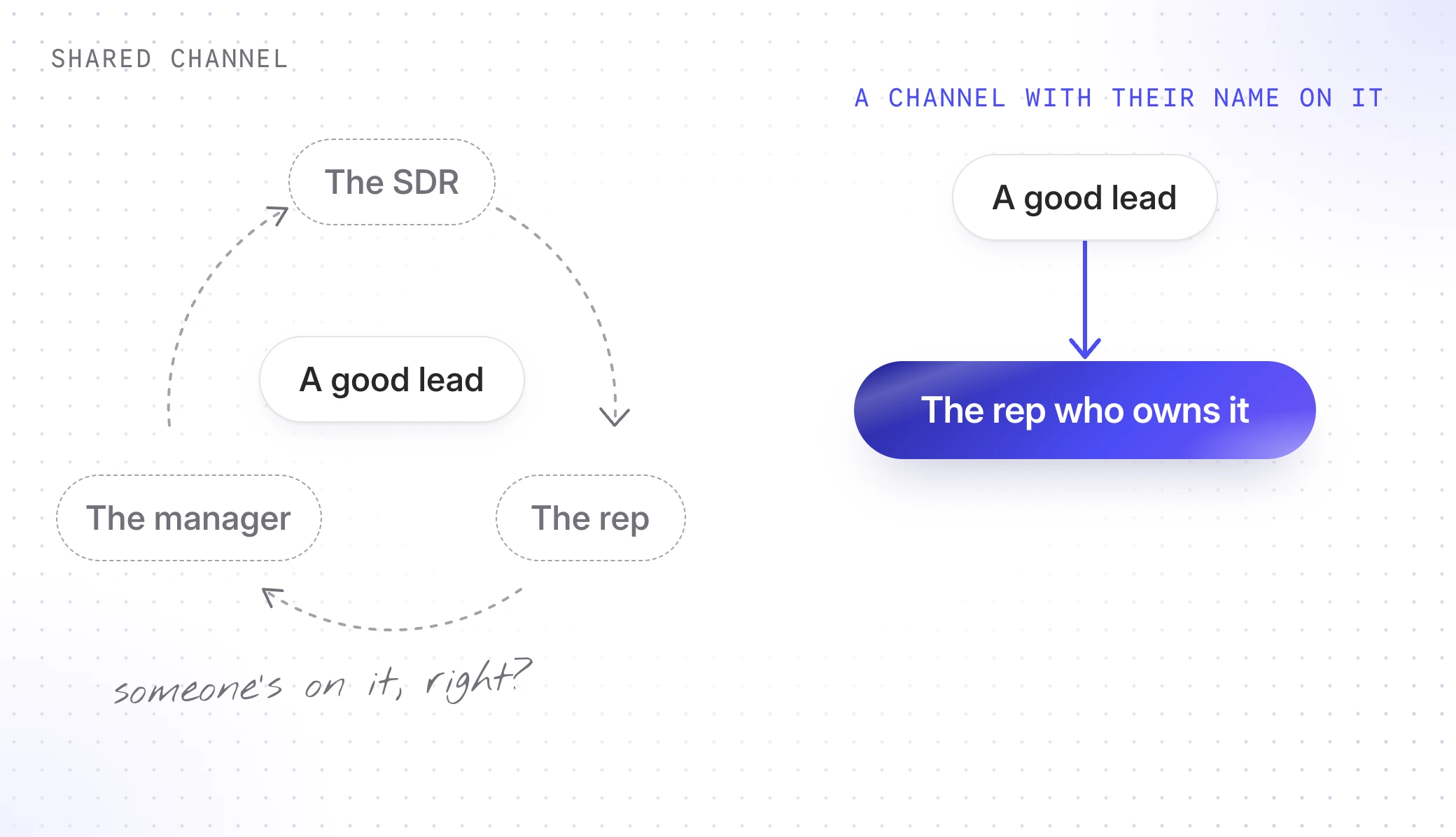
Target accounts, open deals and big customers work the same way: if an alert has one owner, send it where only they read it.
What happens to the accounts nobody owns?
Most companies on your website won’t have an owner, and that’s fine. You don’t need to assign everything. You need to assign what’s worth working.
- Good fit and showing intent: assign it now, by rotation or territory. The moment someone reaches out, they own it in the CRM, so the next visit goes straight to them.
- Good fit, no intent yet: marketing keeps it warm. When it wakes up, the routing rules pick it up.
- Poor fit: nobody. On purpose.
Then add a time limit. If an assigned account hasn’t been touched in a couple of weeks, it goes back to the pool for someone else. Use it or lose it. (Reps suddenly find time for those accounts.)
How do stages stop the same lead being worked twice?
Ownership tells you who. Stages tell you where it’s at.
Without stages, the same company gets looked at by five people over five days, and each of them decides it’s interesting. With stages, the first person to look at it decides, and everyone else can see what they decided.
| Stage | What it means |
|---|---|
| New ICP lead | A good fit, nobody’s looked yet |
| High intent | A good fit showing buying signals. Someone should look today. |
| Qualified | Someone looked and said yes. It has an owner. |
| Disqualified | Someone looked and said no. Nobody needs to look again. |
| Opportunity | There’s a real conversation or a deal |
| Lost | It didn’t happen this time. The owner still watches it. |
| Customer | It’s customer success’s now |
The most underrated part is “Disqualified”. When someone looks at a company and says no, mark it. That way nobody else spends ten minutes reaching the same conclusion next week.
So, who owns this lead?
Somebody specific. Decided by a rule, visible in the CRM and alerted in a place only they read.
Write down your routing rules, give each rep their own channel, time-limit the accounts nobody works and mark what’s been looked at. The leads you have are worth more than the leads you don’t, as long as one person knows they’re theirs.
Wondering how many good leads on your website right now have no owner? Try Snitcher, connect your CRM and filter on an unknown owner. Then decide who gets them.