Somewhere in your marketing automation tool there’s a rule that says “+5 points for opening an email”. Next to it: “+10 for downloading the ebook” and “+3 for visiting the blog”.
At 100 points, the lead becomes “marketing qualified” and lands on a rep’s desk. The rep calls. It’s a student writing a thesis on B2B marketing.
The rep stops calling MQLs. Marketing builds a more complicated scoring model. Nobody calls those either.
That’s how lead scoring got its reputation. This post is for everyone who’s been through that loop. We’ll cover why points went wrong, the two questions that replace them, which signals actually mean someone is buying and how to tell whether any of it is working.
Why did lead scoring get a bad name?
Because points measure activity, not buying.
Opening an email is not intent. Some email apps open every message automatically to load the images, so half your “engaged” leads are a privacy setting. Reading a newsletter for a year adds up to the same score as reading your pricing page twice this week. Only one of those people wants to talk to you.
Then nobody can explain the number. “Why is this company a 73?” Nobody knows. The person who built the model left two years ago. (Their scoring spreadsheet lives on.)
And because marketing was measured on how many MQLs it handed over, the threshold slowly crept down. Sales noticed before anyone said it out loud.
What should you score instead?
Two things and only two:
- Fit: does this company look like your best customers? That’s your ICP, ideally as a tier from A+ to D. (We wrote a whole post on turning your ICP into a scorecard.)
- Intent: is someone at this company acting like they’re buying, right now?
Fit is about who they are. It barely changes. Intent is about what they’re doing. It changes every week.
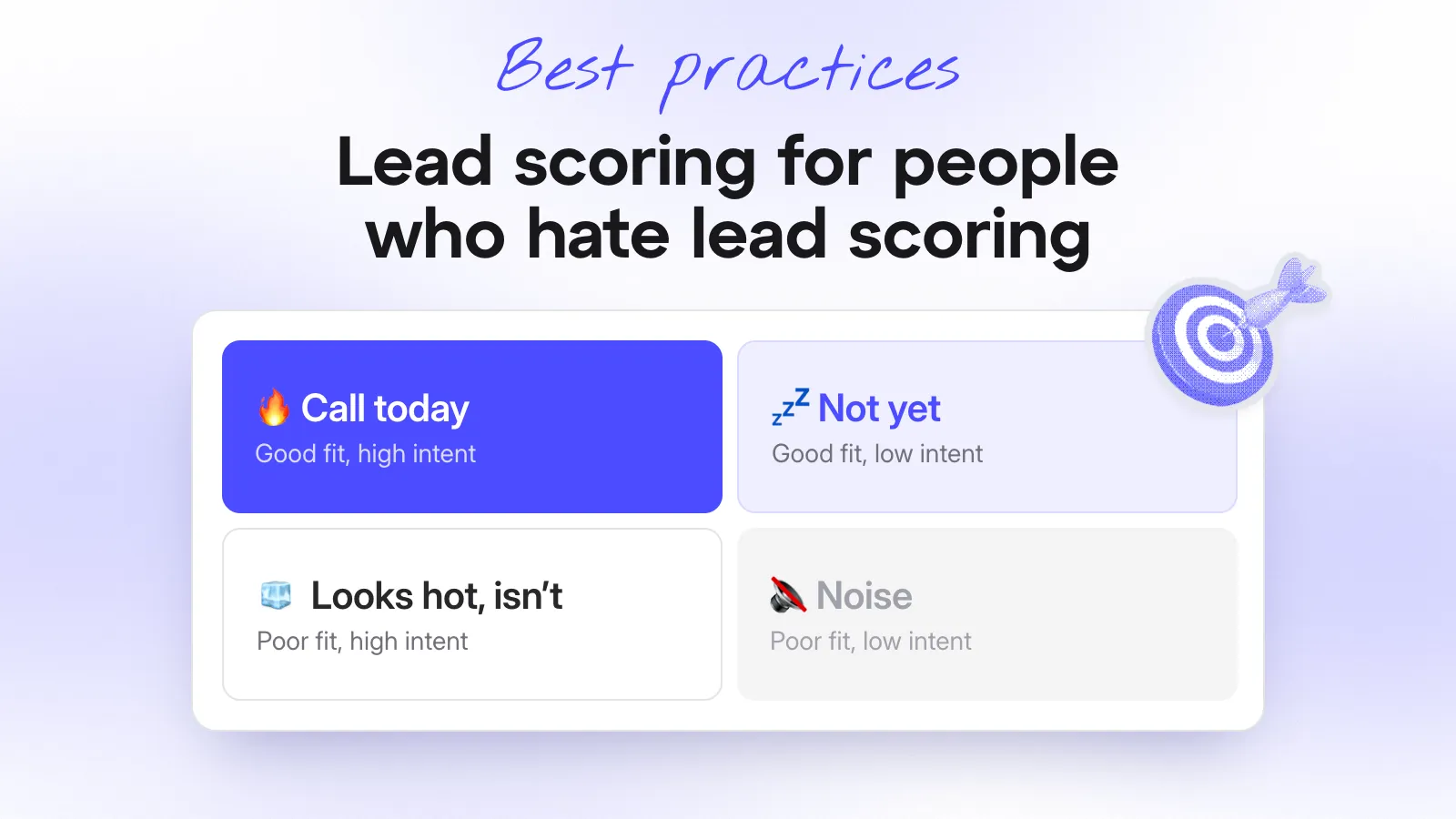
Put them on two axes and you get four boxes:
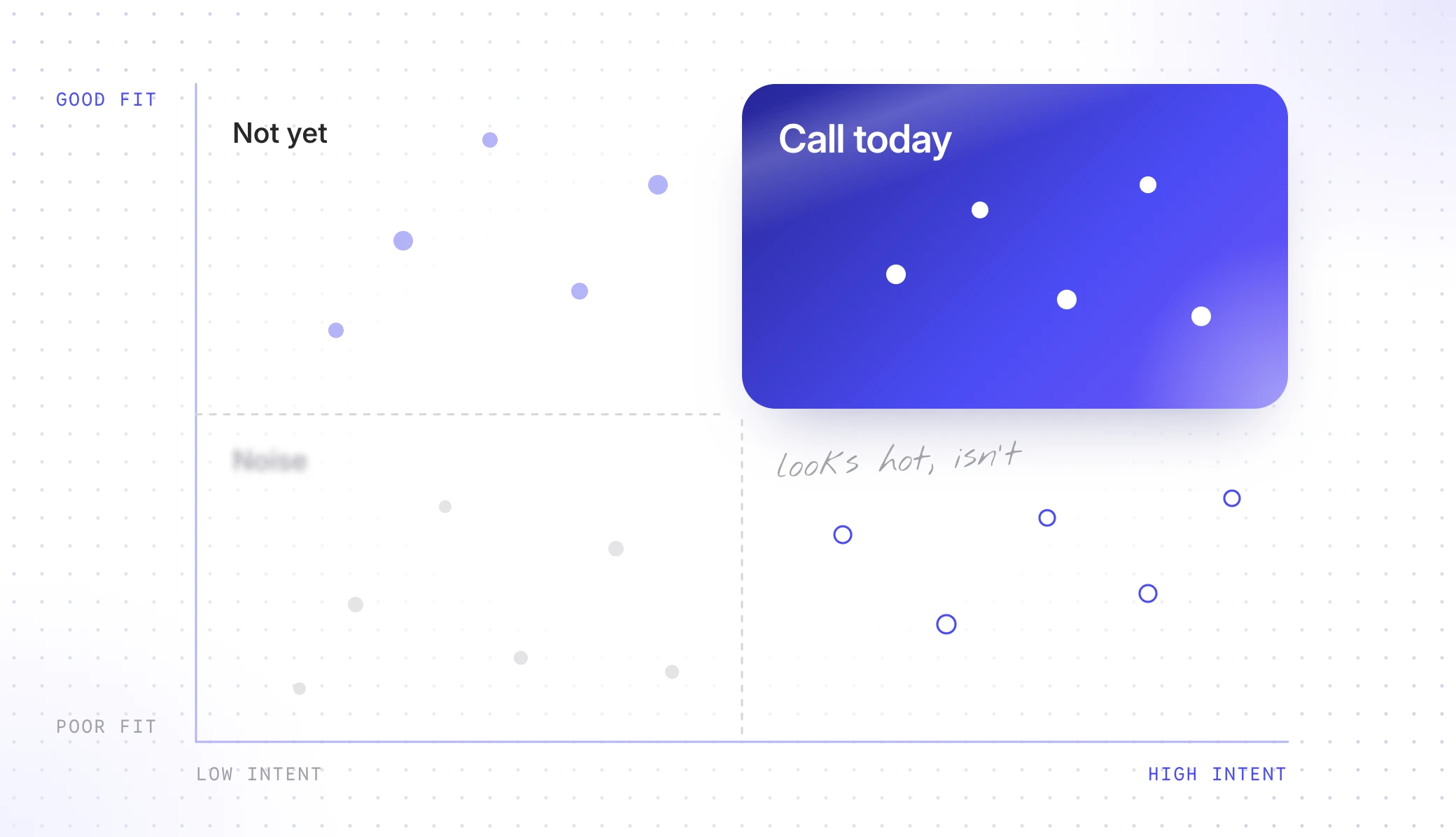
That’s the whole model. No points, no decay curves, no workshop. Any rep can explain why a company is in a box in one sentence: “It’s an A-tier and they were on pricing twice this week.”
Which signals actually mean intent?
The pages only a buyer would read. Nobody reads your security page for fun.
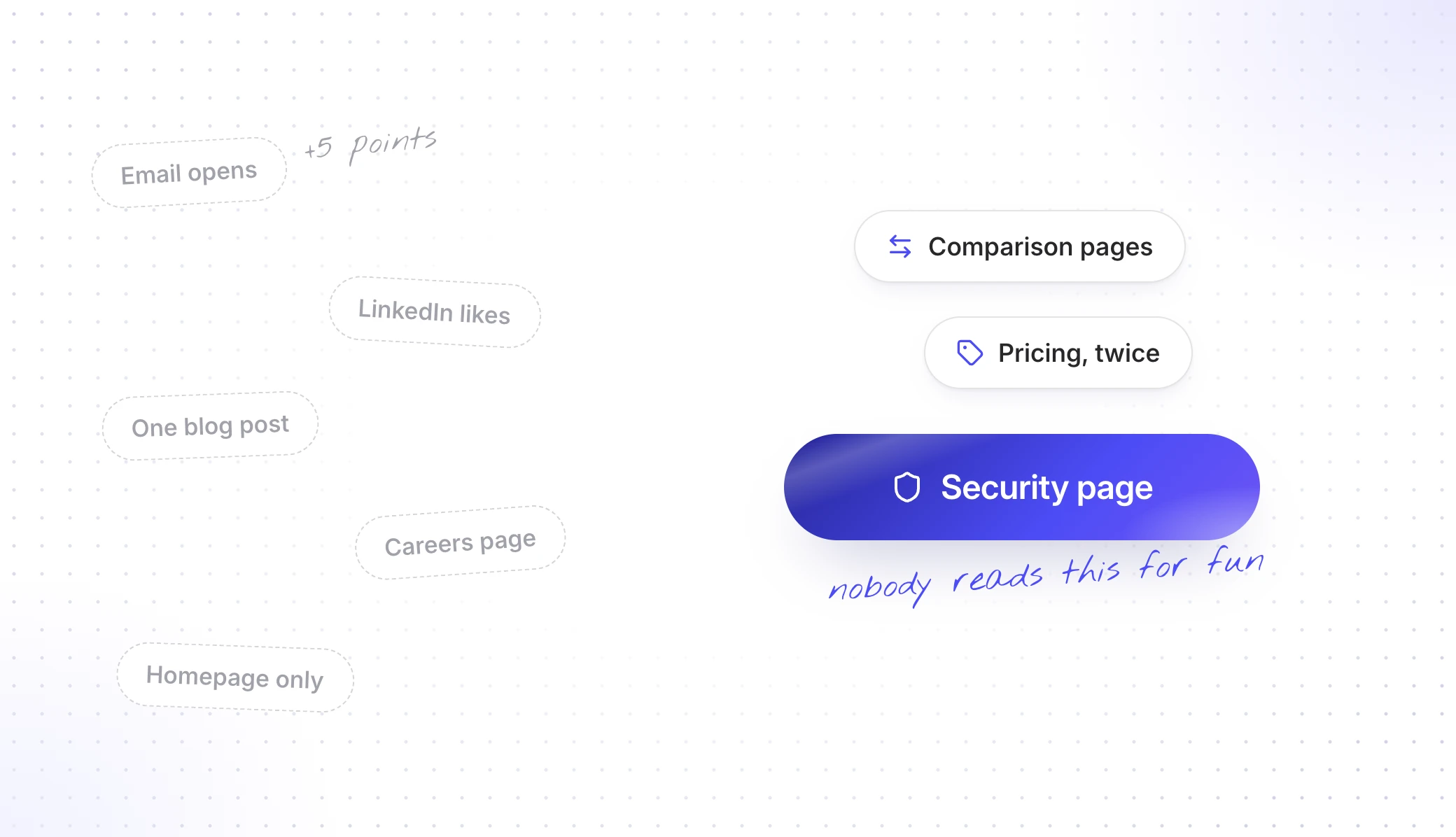
Recency matters more than volume. A pricing visit last Tuesday beats ten blog visits in March. If your intent signal doesn’t fade, you’ll end up chasing companies that were interested last spring.
And watch the timing. A visit that lands two minutes after your rep’s email is usually just someone clicking the link. Hold the celebratory Slack message.
What do you do in each box?
| Box | What to do | Who |
|---|---|---|
| Call today | Reach out the same day, personally, and mention what they’re working on, not what they clicked | The rep who owns the account |
| Not yet | Keep them warm with retargeting or a newsletter and set an alert for when they wake up | Marketing |
| Looks hot, isn’t | A quick check. Is it a competitor, a job seeker or a student? If it’s a real company, a short automated reply is plenty | Automation, or two minutes of someone’s time |
| Noise | Nothing. Really, nothing. | Nobody |
The tricky box is “looks hot, isn’t”. These companies feel urgent because they’re busy on your website. Often that’s a competitor doing research or someone polishing their CV. (Exclude both before they ever reach a rep. Our post on setting up visitor identification covers how.)
But now and then it’s a new market knocking. If the same kind of poor-fit company keeps turning up with real intent, that’s not noise. That’s a conversation about your ICP.
How do you know it’s working?
Four checks, once a quarter:
- Reps open the alerts. If someone has muted the channel, the box is too big. Tighten fit or intent until every alert is worth reading.
- The top box converts better. Compare meetings and deals from “call today” with everything else. If there’s no difference, your score is measuring nothing.
- The box is the right size. If it’s bigger than your reps can call, raise the bar. If it’s empty most weeks, lower it.
- Anyone can explain any score. If a rep asks “why this one?” and the answer takes more than a sentence, simplify.
None of this needs a data team. It needs a calendar reminder and someone honest enough to say “this isn’t working”.
So, should you score leads at all?
Yes. Just not with points.
Ask whether they fit and whether they’re buying. Work the companies where both answers are yes, keep an eye on the ones that only fit and ignore the rest without guilt.
Want to see which companies on your website are in the “call today” box right now? Try Snitcher, set up your ICP and add a High intent filter. It’s a shorter list than your MQL report and that’s the point.